.png)
Releasing Stored Trauma Through Somatic Therapy : The Connection Between Hips and the Nervous System
- Francesca Nardelli

- Jul 14
- 4 min read
In the context of physical wellness, we often view tension as a purely muscular issue. If the hips are tight, the solution is assumed to be more stretching. However, many people find that consistent stretching provides only temporary relief. This is often because tension in the hips is not just physical; it is frequently a manifestation of the nervous system holding onto stress, commonly referred to as stored trauma.
Somatic therapy focuses on the idea that the body and mind are not separate. When we experience stress or trauma, our nervous system may remain in a state of high alert. To protect itself, the body creates patterns of chronic muscular tension.
Why the Hips Hold Tension
The hips are a primary junction point in the body. They contain the psoas muscle, which is often called the "muscle of the soul" or the "fight-or-flight muscle." Because the psoas is directly connected to the diaphragm and the autonomic nervous system, it responds instantly to stress.
When you are under pressure, the psoas tightens to prepare the body to run or protect itself. If that stress is not resolved through movement or completion of the stress cycle, the psoas, and the surrounding hip musculature, can stay in a contracted state. Over time, this becomes a baseline setting for the body, leading to restricted mobility and a persistent feeling of being "on edge."
How Somatic Therapy Practice Works
Somatic therapy is not about forcing the body into a specific shape. Instead, it is a practice of moving with conscious awareness to signal safety to the nervous system.
Traditional stretching often pushes the body to its limit, which can accidentally trigger the stretch reflex, a protective mechanism that causes muscles to tighten further. Somatic practice works differently:
Slow, Intentional Movement: By moving extremely slowly, you allow your brain to map the movement and recognize that you are in control.
The Power of Release: Rather than holding a static pose to gain flexibility, you focus on the voluntary release of tension. When the brain senses that it is safe to let go, the muscle fibers relax more deeply than they would through passive force.
Breath as a Regulator: Controlled, rhythmic breathing shifts the nervous system from a sympathetic state (fight-or-flight) to a parasympathetic state (rest-and-digest).
Integrating Somatic Awareness
To begin releasing stored tension, you do not need any equipment. You can start by observing how your body responds to simple movements.
Notice your body's current state: In a low lunge or a seated forward fold, scan your body. Where are you holding tension? Are your shoulders raised? Is your jaw clenched?
Move within your limits: If a pose feels like a struggle, you have moved past the point of somatic benefit. Back out of the pose until you find a position where you can breathe deeply and fully.
Use the contract-release method: Gently tighten the muscle you are targeting for a few seconds, then release it slowly. This highlights the difference between tension and relaxation, helping the brain "re-learn" how to let go.
The goal of this practice is to create a sense of internal safety. When the body feels safe, it can release the protective armor it has built up. By prioritizing this connection, you allow your physical mobility to improve as a natural side effect of emotional and nervous system regulation.
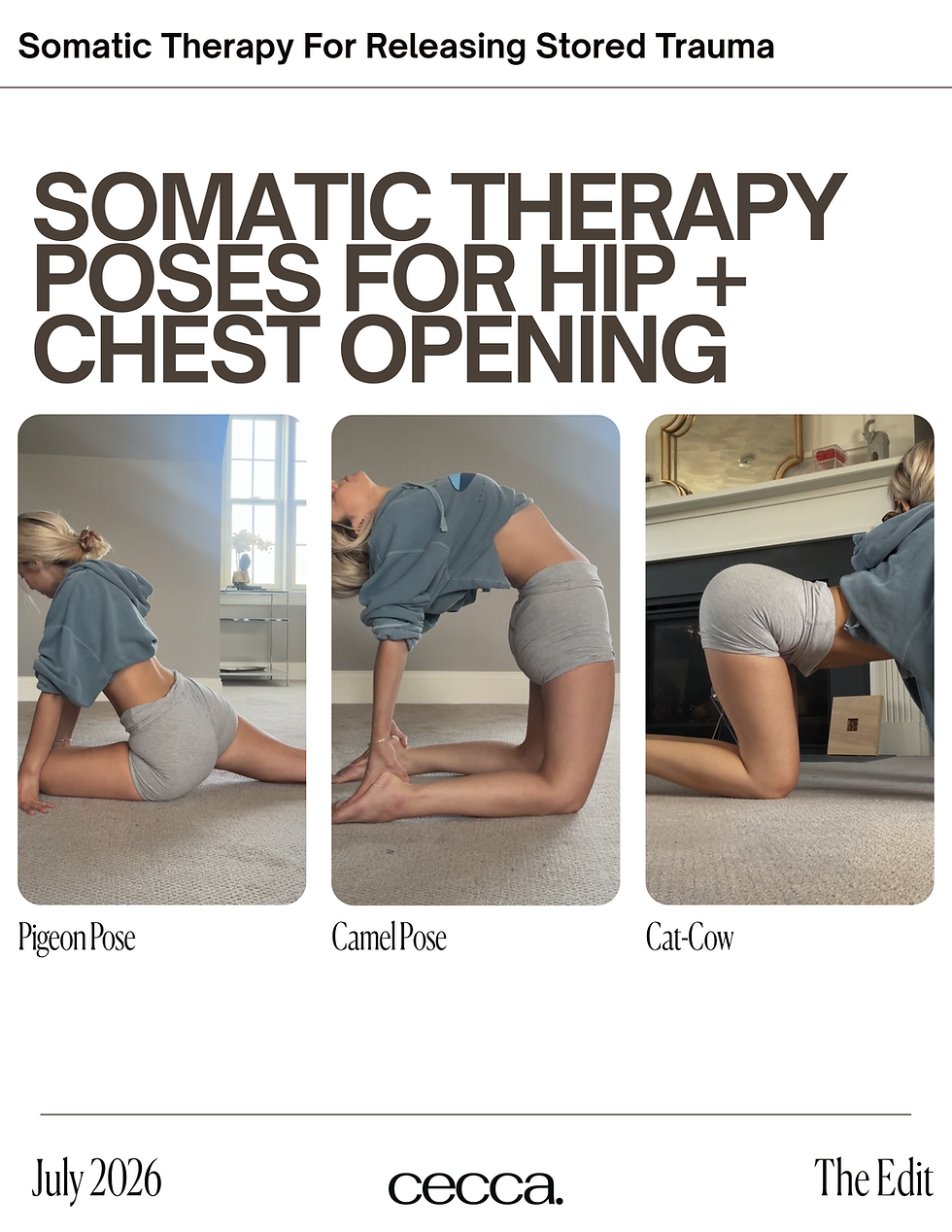
1. Pigeon Pose (Eka Pada Rajakapotasana)
A deep hip opener that helps release physical and emotional tension stored in the lower body.
The Sensation: A deep, sometimes intense stretch through the outer hip, glute, and hip flexor.
How to do it: Start in a downward-facing dog or tabletop position. Bring your right knee forward and place it behind your right wrist, angling your right shin toward your left hip. Extend your left leg straight back behind you.
Somatic Tip: Use bolsters, blocks, or folded blankets to support your hips and chest. Focus on the sensation of your exhales softening and "melting" tension in the hip. Avoid forcing your hips to the floor if it causes pain.
2. Camel Pose (Ustrasana)
An invigorating heart-opening backbend that stretches the front of the body and can help release feelings of vulnerability or rigidity.
The Sensation: An opening through the chest, throat, and abdomen.
How to do it: Kneel on the floor with your knees hip-width apart. Place your hands on your lower back (fingertips pointing down). Engage your glutes, lift your chest toward the ceiling, and gently arch backward. If comfortable, reach back to hold your heels.
Somatic Tip: Prioritize your breath. If you feel restricted or panicked in your breathing, ease out of the backbend. Keep your hips stacked directly over your knees.
3. Cat-Cow (Marjaryasana-Bitilasana)
Often called Cat-Camel, this is a foundational spine-mobilizing exercise.
The Sensation: Focus on the wave-like motion of your spine rather than the shape itself.
How to do it: Begin in a tabletop position on hands and knees.
As you inhale, gently drop your belly toward the floor, arch your back slightly, and lift your chest.
As you exhale, tuck your tailbone and round your spine toward the ceiling like an angry cat, dropping your chin to your chest.
Somatic Tip: Instead of forcing the extreme ranges of motion, move as slowly as a lava lamp. Let the movement start in your pelvis and ripple up to your neck.
Comments